- Click Analytic's Newsletter
- Posts
- Thursday, May 07th
Thursday, May 07th
Top Creator News, Stories & Tips

Paul Boulet
May 07, 2026
Hey, marketers & entrepreneurs,
It’s Paul from Click Analytic 👋
Welcome to our 55 new subscribers, who are joining a community of 58,000+ marketers & founders building with creators every day.
This month's special edition: my top creator campaigns of April 2026. The sharpest ideas. Not the biggest budgets.
→ Miu Miu got 4M organic views with a fake dessert and zero paid media
→ 1,000 packages sent to the "wrong" person. On purpose.
→ A 4-month-old brand flew 17 people to St. Barths and broke the internet.
Oh, and the platforms had a busy month too:
→ Instagram is killing reposts, Netflix just entered the short-form race, and Snapchat's chatbots now have sponsors.
Check it all below 👇
🗓️ Quick Recap:
And more…
Estimated read time: 3 minutes or less
📊 Did you know?
4 in 10 brands are completely invisible in TikTok search.
(Refluenced, 2026)
🚀 Top APRIL Creator Campaigns
Every month, I round up the most interesting creator campaigns brands ran.
Not the biggest budgets ❌ The smartest ideas ✅
Here are 5 creator campaigns worth studying 👇️
1️⃣ Miu Miu (The Ice Cream That Wasn't)
Miu Miu sent 10 creators a PR kit for their Fleur de Lait Eau de Parfum.

Inside: a kinetic-sand ice cream scoop. A silver Miu Miu spoon. No brief. No instructions.
The scent notes (mango, coconut milk, osmanthus) were translated into a tactile, edible-looking object. Creators opened the box on camera, genuinely confused. "Is that real ice cream?" Nobody needed a brief. The object wrote the content.
→ ~4M organic views in 24 hours
→ $86,358 estimated EMV
→ $0 paid media spend

The campaign even jumped to LinkedIn, where marketers started dissecting the strategy in real time, turning a beauty PR send into a B2B case study.
Why it worked:
Genuine surprise created re-watchability. Confused comments ("do you eat that?") became free distribution
The scooping ritual had a natural Reel arc: anticipation, action, reveal, no editing required
A box that explains nothing forces creators to become curious, that curiosity is contagious
💡 Lesson: When everyone sends a box, send an experience. The best PR kit doesn't need a brief, the object IS the brief.
2️⃣ Refy !No Approval Needed!
For its Skin Base Skin Tint launch, Refy paid 12 creators and told them not to send anything back for review.
No sign-off ❌
No approval ❌
→ Just post!

The brief, as one creator summarised on TikTok: "We want you to create content your audience loves. We're so confident you'll love it that we want you to post without our approval."
Creator Kayla Ryan (1.3M TikTok followers) posted: "I have never had a brand do that with me before." That reaction, the disbelief itself, became the hook. Creators who weren't even part of the campaign started resharing it.
@kayla.ryann @REFY did NOT approve this video😳 what do yall think of their new skin tints? 🙂↔️🤏🏼 #skintint #makeupreview #trending #refypartner
Why it worked:
In a world of cookie-cutter briefs, full trust became a story, not just a product launch
Organic creator reactions gave the campaign more reach than the paid content itself
The brand's confidence in the product came across without a single brand-written word
💡 Lesson: Letting go of control can be the most powerful brief you ever write. Trust is a hook.
3️⃣ Lancôme — Accidentally Delivered
Lancôme didn't announce Demi Moore and Zoe Saldaña as ambassadors.

They sent the announcement to the wrong people!
Around 1,000 boxes of Absolue Longevity MD products were intentionally misaddressed to Moore or Saldaña, sent to influencers, editors, and medical experts.
A plastic surgeon named Monica Kieu posted a TikTok: "I think this package was meant for someone else." She found Zoe Saldaña's name on the label. Lancôme replied in the comments: "Oh no, we'll have to look into this mix-up."
When Kate Hudson and Pauline Chalamet also posted about misaddressed packages, the game was up, but the intrigue had already done its job.
Moore and Saldaña then dropped videos telling anyone with their name on a package: "finders keepers."
Why it worked:
Confusion created curiosity. Every creator became an unwitting detective
The mystery drove shares before anyone understood the product
The layered reveal extended the campaign's lifecycle across multiple news cycles
💡 Lesson: Information is forgettable. Intrigue is shareable. Give people something to figure out, not just something to read.
4️⃣ Swan Beauty X A Bachelorette
Swan Beauty was four months old.
Under 3,000 Instagram followers.
A product that costs $795 and needs serious education to sell.
Their solution → sponsor a bachelorette trip!
But not any bachelorette…
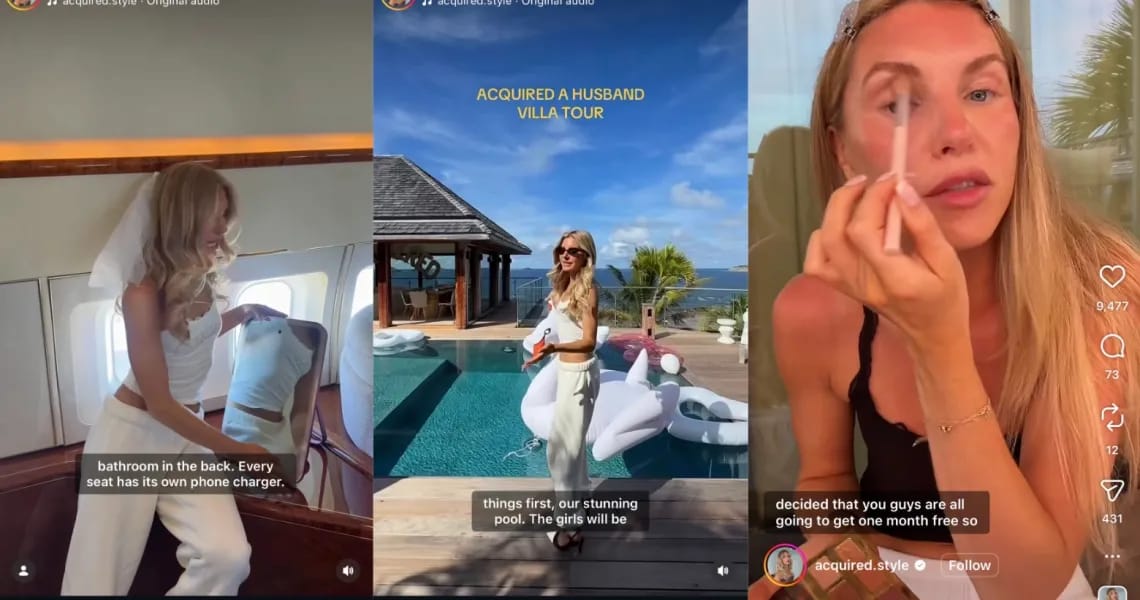
The brand flew influencer Brigette Pheloung (@acquiredstyle, 1.7M TikTok followers) and 16 guests via private plane to a villa in St. Barths for a weekend dubbed "Acquired A Husband"
Pheloung posted 26 pieces of content around the event.
Swan Beauty's Google searches hit an all-time high.
Pheloung herself crossed 1M Instagram followers over that weekend.
Why it worked:
The brand didn't manufacture attention, they placed themselves inside a moment that already had it
At $795, no one impulse-buys a smart mirror. But millions stopped scrolling and asked "what is that?"
A group of lifestyle creators documenting everything meant content came from every angle, continuously
💡 Lesson: Don't create attention from scratch. Find a moment that already has it, and buy your way in.
5️⃣ The First AI Campaign at Coachella
Coachella has hosted phone brands, beauty brands, and drink brands for years.
Google just became the first company to run a Coachella influencer campaign around an AI tool.
Interview-style content showed creators weaving Gemini into their actual festival routines, packing, outfit planning, logistics.


AI-powered photo booths let attendees stylise festival photos in real time. Macro-creators like Monet McMichael and Meredith Duxbury showed practical use cases, making the AI feel native rather than announced.
Why it worked:
Coachella is show-don't-tell. Putting Gemini inside a real routine made it feel useful, not promotional
A tech brand operating with the cultural fluency of a beauty brand is itself a story
Concrete, relatable use cases beat product specs every time at a live event
💡 Lesson: Abstract products need concrete moments. Don't explain what your tool does, show it solving a real problem in a context people already care about.
⭐️ BONUS CAMPAIGN - MARSHALLS
Most brands focused their Coachella push on Weekend 1.
Marshalls wasn't even in the conversation, until…
→ two creators made fun of them
Macy Thompson and Emily Sarre posted satirical skits about influencers shopping for festival looks at Marshalls.
The discount retailer spotted the content, moved fast, and turned the creators' TikTok bit into a real brand trip for Coachella Weekend 2: flights, accommodation, festival outfits, all covered.
@macy_thompsonn Best fitting ever 😭 so excited to see these looks come to life in the desert @Emily Sarre @Marshalls #coachella #coachellalooks
Why it worked:
The content was already made. The audience was already engaged. Marshalls just made it real.
Speed was the entire play, the window on a trending joke is hours, not days
Jumping into an existing joke reads as self-aware and earned trust faster than any campaign brief
💡 Lesson: The best brand opportunities sometimes show up as jokes. The brands that win are the ones fast enough to say yes before the moment passes.
🎁 Want to run campaigns like these?
The brands above didn't get lucky ❌
→ They found the right creators, moved fast, and trusted the process.
Click Analytic gives you the tools to do the same. Find creators that actually fit your brand, track campaign performance, and scale what works.
What you can copy for your campaigns
Make the object do the briefing. When your PR kit creates genuine confusion and delight, creators don't need instructions (Miu Miu).
Trust is a hook. Giving creators full control isn't just good for authenticity, it becomes the story itself (Refy).
Replace information with intrigue. People share mysteries, not press releases (Lancôme).
Don't build attention from scratch. Find a moment that already has an audience and buy your way in (Swan Beauty, Marshalls).
Move fast on organic humor. A joke at your expense is an opportunity if you catch it in time (Marshalls).
📱 Social Snapshot
▶️ Instagram penalizes unoriginal photo and carousel posts
🚫 Instagram cracks down on content aggregators across the platform
🏷️ Instagram tests AI creator labels — optional for now, not a mandate
✂️ Instagram lets you swap text in someone else's Reels
🎬 Netflix launches Clips its TikTok-style vertical video feed
🤖 Snapchat now has sponsored AI chatbots brands can power Snap's AI personas
📩 Threads brings DMs to desktop finally
📺 YouTube expands live gifting adds vertical/horizontal simultaneous streaming and pauses ads during live chat spikes
📣 X debuts a new ad platform Musk's monetization rebuild continues
🎉 Meta hosts its first creator festival courting creators in person
What Should We Write More About? |
That’s it for this week 👊
More insights, case studies & campaign breakdowns coming next Thursday!
Until then → keep building, keep testing, and create moments worth sharing.
— Paul from Click Analytic